

Adam Burke
producer/editor/reporter-
 Chip Thomas, a retired physician on the Navajo Reservation, is well known for his large photograhpic murals. Now, he's been recognized with a MacArthur "genius" grant.
 -
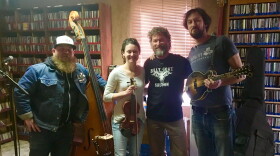 During his 20 years of service, Jim Belcher has been beloved among KSUT listeners for his enduring presence as 'Morning Edition' host and his deep, eclectic knowledge of music.
 -
 Raymond Gallegos had an idyllic childhood growing up next to the Piedra River. When he was 13, the family had to move to make room for a giant reservoir.
 -
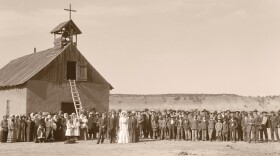
 In the historic settlement of Tiffany, Colorado, a tiny church is almost a hundred years old. The adobe is crumbing, the walls are held together by steel cables. But the church is still open for mass once a year. Meet the woman who plays the old pump organ in the Iglesia de San Antonio.
 -
 KSUT's Adam Burke interviews Williams about her latest book, where she explores extraordinary encounters in the natural world, in an effort to make sense of the COVID-19 pandemic and her long tenure as writer in residence at Harvard Divinity School.
 -
 20 years ago, a couple running a nursery in Cortez, Colorado, started looking for an apple variety that had been common in Montezuma County in the early 1900s. Jude and Addie Schuenemeyer's quest to find a Thunderbolt apple tree would change the course of their lives.
 -
 In the 1980s, Janice Sanders worked as a geologist at the Sunnyside Mine near Silverton, Colorado. She loved the work, but she and other women who worked there, faced sexism and discrimination.
 -
 Native American athlete and skiing Hall of Famer Ross Anderson grew up in Durango and he's held the U.S. record in speed skiing for 20 years. This is the first time the city has formally recognized his athletic achievements.
 -
 Campbell is one of only four Native Americans in U.S. history to serve in the United States Senate. On Monday, April 13, 2026, a gathering in Ignacio drew hundreds to celebrate Campbell's unusual life trajectory.
 -
 Becky Mitchell represents Colorado in the ongoing negotiations over the river. At a seminar last week, Mitchell outlined Colorado's position in talks with six other western states and talked about why hope is fading for a negotiated settlement.


